Game Overview – Trickarus by Smirk & Dagger
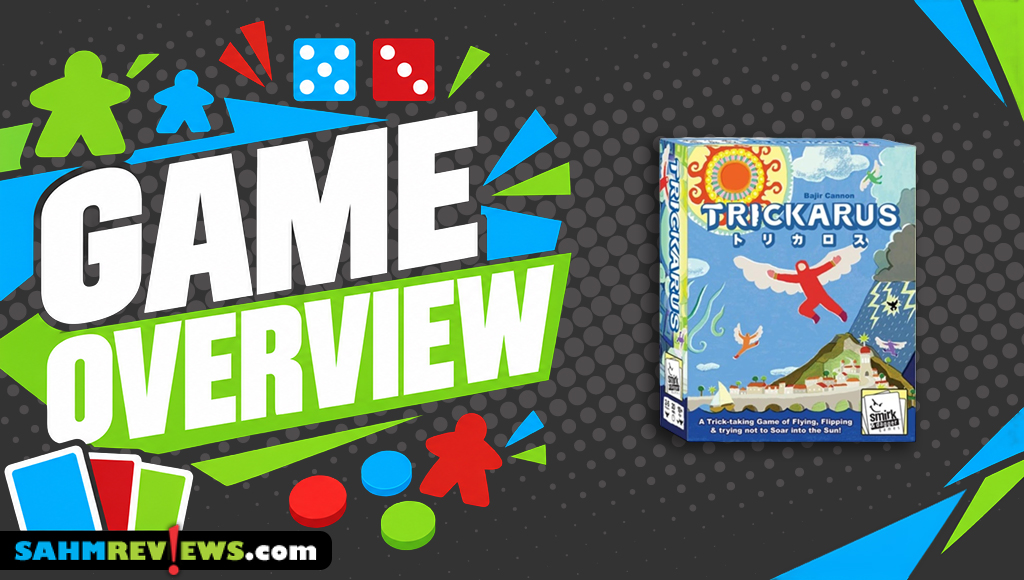
Sometimes a game travels a long way before finding a spot on a local store shelf. During Origins in June, we met with a friend who was testing out some titles previously published in Japan. This is just one of many iterations of how a small release in another country is eventually picked up by a publisher to bring it to a larger audience. Trickarus followed a similar journey, catching the eye of a US publisher who opted to localize it.
Designed by Bajir Cannon, Trickarus originally appeared in Japan through Learn Bridge Online in 2024. Cannon, who runs the bridge-learning website, announced the game at Japan’s Game Market events and shared its Tokyo debut with his online students. Now Smirk & Dagger has brought the game to the United States. We don’t hear people talk about playing bridge much (it has an old-people stigma to it!), but don’t worry, you won’t need to learn bridge or book an international flight to give it a try!
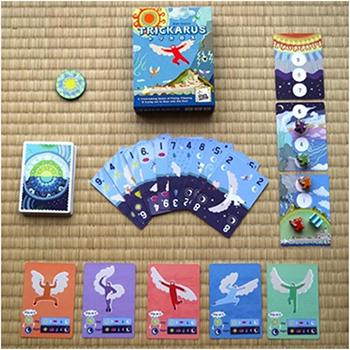
Trickarus is a trick-taking game for two to five players, ages 10 and up, with a listed playing time of about twenty minutes. The theme draws on Icarus, whose flight famously ended badly after he ventured too close to the sun. Here, winning tricks sends your character higher into the sky. That sounds like progress until you realize where you’re headed.
Set the three scoring cards into a vertical track and place the player pieces at ground level. Shuffle and deal according to your player count, then arrange your hand with the light daytime portions active. A day/night marker shows which portion everyone is currently using. You aren’t choosing between the two halves whenever you play; the marker determines that for the whole table.
If trick-taking is unfamiliar, a trick is simply one card played by each person. The leader plays first, establishing the color everyone else must follow if they can. If you don’t have that color, you can play something else. Once everyone has contributed, determine the winner, move their piece and let them lead the next trick.
The cards come in four suits: yellow suns, white moons, pink clouds and blue rain. During daytime, yellow is trump, meaning it beats cards of the other suits. At night, white takes that role. Among trump cards, the highest value wins. If nobody plays trump, the highest card matching the lead color wins instead. A big number isn’t automatically the best card at the table.
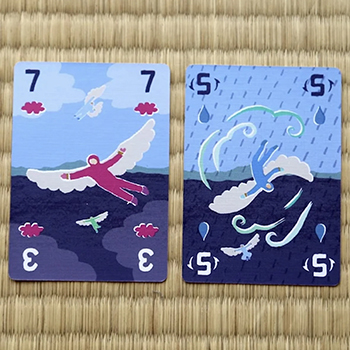
Each card also has separate day and night values. A card that looks strong right now can become much weaker when everyone switches to the other half. The reverse is also true. Holding a low card doesn’t necessarily mean it will stay low, which gives you something else to consider before deciding what to save.
That switch happens whenever someone plays a five. Immediately change the day/night marker and rotate every card in everyone’s hands and those already played to the current trick. This happens before the trick is finished, so the apparent winner can change halfway through. If another five appears, everything switches again. Apparently, the weather forecast didn’t mention any of this.
Imagine somebody playing a yellow card during the day when yellow is trump. A later five changes the table to night, and suddenly white has the advantage instead. The yellow card is still there, but its value and place in the pecking order have changed. You have to evaluate what is showing now rather than what looked promising a moment ago.
Winning a trick moves your character to the next empty space above them. Occupied spaces are skipped, so a single win can carry you past several opponents. That’s useful when you want to climb. It’s considerably less useful when those opponents are sitting between you and the sun. They may have provided a shortcut you didn’t actually want.
Reach the sun and your character falls to the space beneath the lowest player. In the standard multiplayer competitive game, that also signals the final round, but everyone finishes playing the cards remaining in their hands. The player highest on the track afterward wins. The crash changes the situation immediately without ending everyone’s opportunity to influence the result.
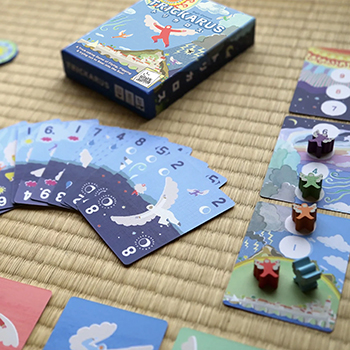
This creates a different question from simply asking whether you can win a trick. Sometimes you need to win, sometimes you need someone else to win, and sometimes a five can change which of those outcomes is possible. Looking at your hand is only part of the decision. The arrangement of pieces on the track matters, too.
The main ideas are approachable, but newcomers should take a moment to understand following suit and trump before worrying about timing a climb. For experienced trick-taking players, the changing card values give familiar decisions another layer. Either way, keeping an eye on that day/night marker is a good habit.
You can find Trickarus through your local game store, on Amazon, or directly from Smirk & Dagger, where it currently lists for $14.99. Just remember that collecting another trick isn’t always something to celebrate. Sometimes the smartest flight plan involves letting somebody else get a little closer to the sun!
Would you rather risk one more win or stay safely below the leader?