Game Overview – Red or Yellow by TheOp
When I designed Hues and Cues, I gave players 480 colors to choose from. Even with that many options, getting everyone to agree on the color of something can be a challenge. One person’s idea of a ripe banana might be several spaces away from someone else’s. Having more choices certainly doesn’t guarantee that everyone will think alike.
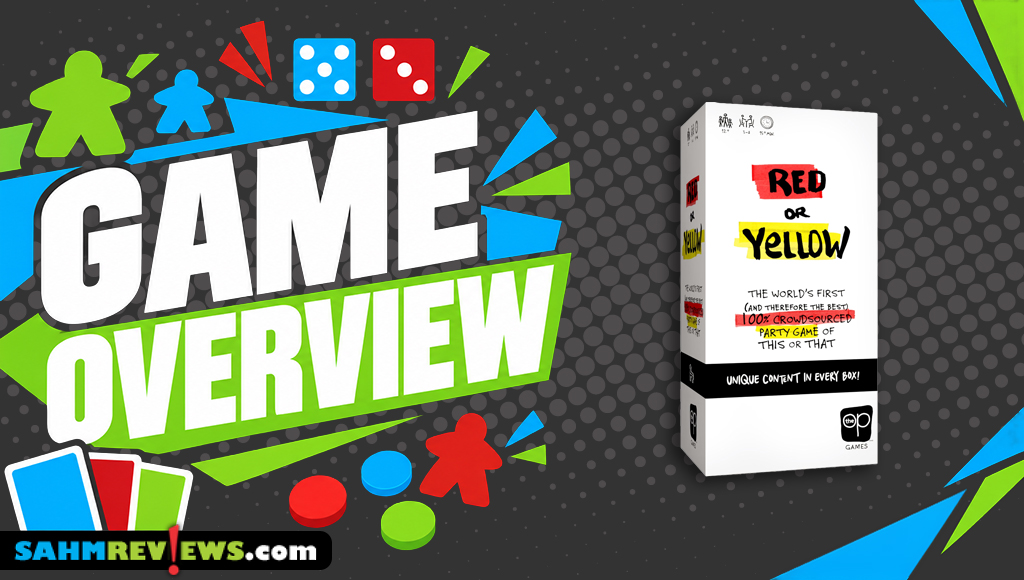
Red or Yellow from The Op Games takes a considerably smaller approach to its palette. There are only two answers to choose from, and the colors tell you which is which. That should make agreeing with the people around you easier, right? I’ve spent enough time watching people interpret clues to know that reducing the options doesn’t necessarily eliminate the disagreement.
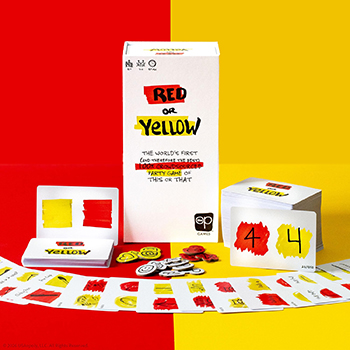
Designed by Sasha Jelten, Red or Yellow is a party game for three to eight players, ages twelve and up. It takes about fifteen minutes, with everyone answering prompts and predicting how the others will respond. Choosing your own answer is only the beginning. Scoring depends on what you think you know about the rest of the table.
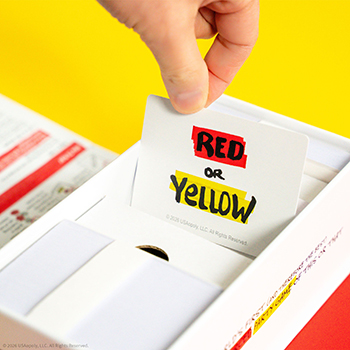
Setup involves shuffling the prompt cards, giving everyone a matching set of tokens and finding a pen and paper for keeping score. Each round starts by revealing a card with two options, one associated with red and the other with yellow. Everyone secretly selects an answer, holding the chosen color face up inside a closed hand.
The example in the rules asks about popcorn: no butter or too much butter. There’s no middle option for those who want a reasonable amount. You have to pick a side, which immediately gives you something to think about. Is having too much better than having none, and does everyone else interpret “too much” the same way?
Before revealing your answer, you use the white side of your other token to make a prediction. There are three possibilities, and you choose one each round. You can identify someone you think agrees with you, predict that you’re the only person who chose your answer, or declare that everyone made the same choice.
Matching Minds is the first option. Place your prediction token in front of another player, and if that person reveals the same color as you, you earn one point. You don’t need to identify the majority or find everyone who agrees. You’re putting your confidence in one particular person.
Flying Solo means placing the token in front of yourself because you think nobody else shares your answer. Get that right and you earn two points, reduced to one in a three- or four-player game. It’s a chance to benefit from knowing that your preferences might be a little different from those of your friends.
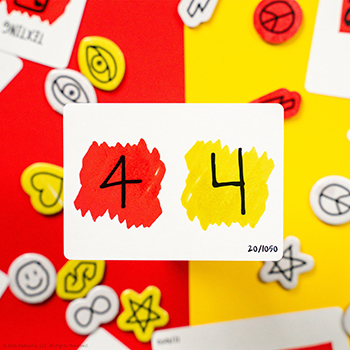
For Unanimous, place your token in the middle of the table. If everyone reveals the same color, a correct prediction earns two points. There’s an important catch here: when the entire group agrees, only Unanimous predictions score. Identifying one matching friend won’t earn anything when you could have identified the whole table.
Everyone opens their hands together, then gets a chance to explain the decision. That’s where the conversation can start. You may have predicted someone’s answer correctly while completely misunderstanding their reason for choosing it. Or you might discover that a person you thought you knew well has an unexpected position on popcorn.
The prompts are deliberately open to interpretation, and the rules encourage setting aside a card that doesn’t work for your group. The first person to reach ten points wins, with fifteen suggested if you want a longer game. There’s no need to stretch a discussion out, but nothing prevents everyone from defending a particularly questionable answer before moving on.
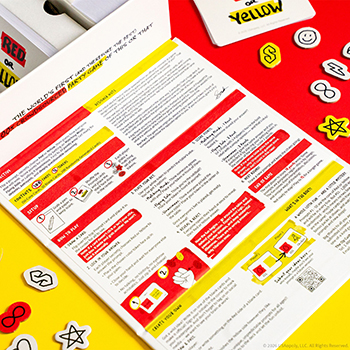
The box includes 300 cards: fifty core prompts, two hundred selected from a larger numbered collection, and fifty blanks. Those blank cards let you contribute your own choices. The rules even suggest writing or drawing one side, then passing the card to someone else to finish the other. I like giving a group room to add things that mean something to them.
Going from 480 colors to two answers sounds like it should simplify matters. What interests me is how both games still leave room for people to surprise each other. Knowing the choices is easy. Knowing what someone else will do with them is another matter.
Visit The Op Games website for more about Red or Yellow, which is currently listed as a Target exclusive. If you prefer ordering through your favorite local game store, ask about availability, and check the publisher’s purchasing information before looking for a copy on Amazon.
Who would you trust to give the same answer as you?