Game Overview – Anomia by TheOp
The older I get, the more often I find myself searching for a word that I know perfectly well. I can picture what I’m talking about, but coming up with the name is another matter. That made the title of Anomia particularly relatable. The word refers to difficulty with word finding or recall, which is also a pretty good description of what can happen when someone is waiting for your answer in a game.
Andrew Innes originally released Anomia in 2009 through Anomia Press. We featured Anomia in 2016 as part of our Thrift Treasure series, having picked it up at Goodwill for under a buck! (That series of games found at thrift stores was a lot of fun, but sadly it fell off the priority list when things got super busy for us.)
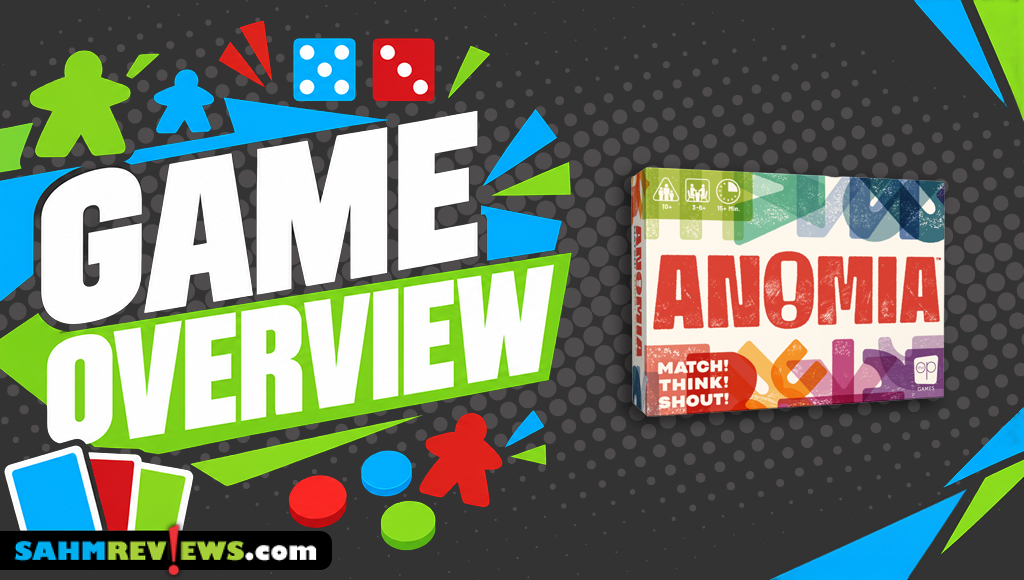
The Op recently added it to their lineup with updated packaging and card designs. I particularly like the new box treatment. The colorful lettering and shapes give it a much different appearance from the earlier blue box. Friend & Fort handled the redesign, including the symbols used throughout the game.
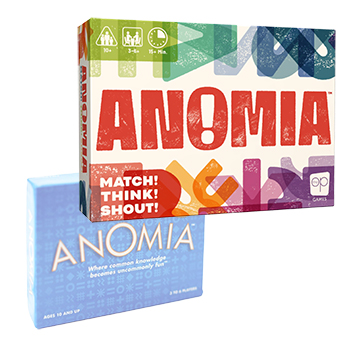
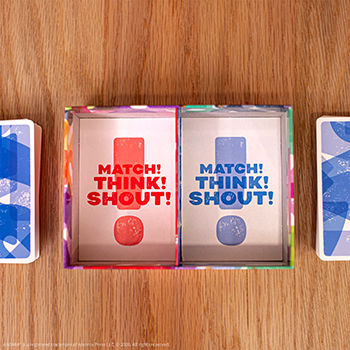
Anomia is a card game for three to six players, ages 10 and up, with a listed playing time of fifteen minutes or more. Inside are two decks, giving you different sets of categories to play with. Choose one, shuffle it and divide it into two face-down draw piles within everyone’s reach. Leave space in front of each person for a play pile and a separate pile of cards they’ve won.
Players take turns drawing from either center pile and revealing a card in front of themselves. Each card displays a category and a symbol. Your new card covers the previous one, so only the top card of your play pile is active. Make sure everyone can see the card at the same time rather than taking a look before showing the rest of the table.
When two players have matching symbols, they immediately face off. Each must name something that fits the category on the other person’s card. You aren’t answering your own category, and you don’t need to wait for your drawing turn. The first person to give a correct answer takes the opponent’s top card and places it in their winning pile. Their own card stays where it is.
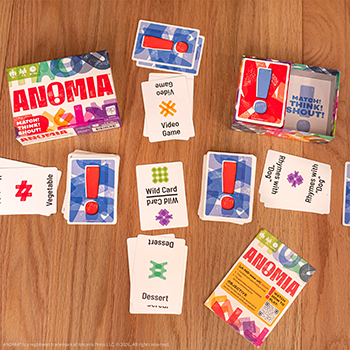
For example, suppose your card says “Dog Breed” and another player’s says “Pizza Topping.” If your symbols match, you need to name a pizza topping while they try to name a dog breed. Neither question requires obscure knowledge. The difficulty comes from noticing the match, reading the correct card and getting an answer out before the other person does. Having several possible answers doesn’t necessarily make choosing one any easier.
Losing a card can expose another card underneath it. If that newly revealed symbol matches someone else’s, another face-off happens before anyone draws again. This is called a cascade, and it can involve players who weren’t part of the original match. Keep resolving those matches until there are none left, then return to drawing in turn order. Paying attention only when you draw will leave you behind.
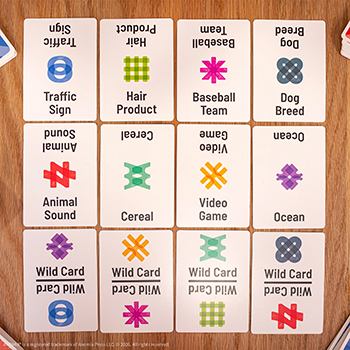
Wild cards add another way for a match to occur. These show two different symbols and sit in the center of the table. While a wild card is active, players displaying those two symbols must face off even though their symbols aren’t identical. Regular matches still count, too. A new wild card replaces the previous one, so you need to keep track of which extra pairing is currently in play.
Once both draw piles are exhausted and the remaining face-offs have been resolved, count the cards in your winning pile. Whoever collected the most wins. You can shuffle and play again or switch to the other deck for different categories.
The speed is worth considering when deciding who to invite to play. Anomia involves watching several cards and answering aloud under pressure, so it suits a group comfortable with that kind of competition. There’s little to learn before starting, but recognizing a symbol and recalling an answer are separate tasks. The second one is the part I can already relate to.
You can find the refreshed edition at retailers or through The Op’s website, where it lists for $17.95. If you have an older copy, look for the new packaging when browsing the game shelves. It’s a noticeable change for a game that has been around for more than fifteen years.
Do you enjoy games that require a quick answer, or would you rather have some time to think?