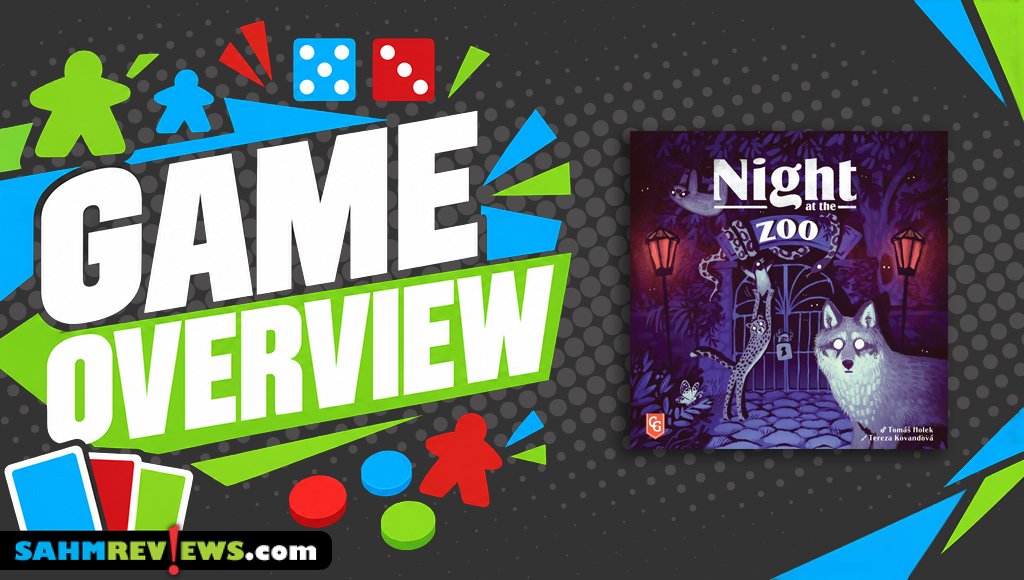
Game Overview – Night at the Zoo by Capstone Games
Here in the Quad Cities, we have Niabi Zoo in Coal Valley. Among its summer offerings is Zoo Nights, when visitors can stay until 8 p.m. on select evenings. Trying to fit an outing around work and everything else on the calendar can be half the challenge of getting there. These later closing hours give families a little more flexibility to visit.
Of course, extending visiting hours does raise the question of what happens once everyone finally leaves. The animals in Night at the Zoo have their own plans. They’ve slipped out for the evening and now need help getting home before their keepers notice. That’s a slightly different situation than staying late at Niabi, but it’s an easy connection to make when looking at this game from Capstone Games.
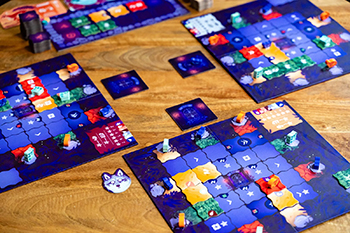
Designed by Tomáš Holek, Night at the Zoo accommodates one to four players and takes about 30 minutes. Everyone is trying to get animals safely home, although you’re competing for points rather than working together. Each player has a separate board to develop while choosing tiles from a shared supply.
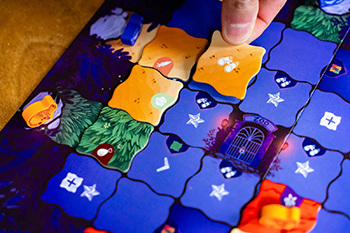
Your board represents the neighborhood surrounding the zoo, which sits in the center. Three of the game’s six animal species are used each time, with each player receiving three animals of each selected species. That gives you nine potential returnees to manage.
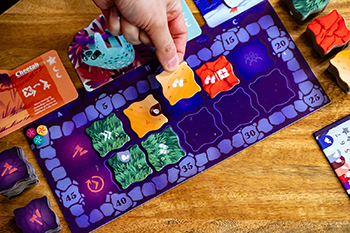
Across three rounds, players take turns selecting tiles, then resolve their choices simultaneously. Placing a tile opens up another space for travel and activates both its action and the action it covers. Those actions can include discovering animals, moving them, awarding points or providing bonus tiles. Discovering an animal brings it into play at its entrance, ready to begin the trip home.
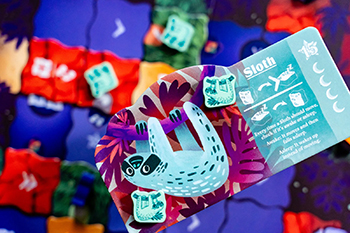
There are other uses for your selection, too. Your warehouse holds up to two tiles for later. Alternatively, discarding a tile moves all your discovered animals that are standing on matching terrain. At the end of each round, the terrain appearing most often among the unchosen tiles provides another movement opportunity. After three rounds, returned animals and food symbols contribute to your final score.
The animals make a difference beyond their appearance. Penguins slide along an available route, while sloths alternate between moving and sleeping. Wolves reward getting more members of the pack home. You’ll need to consider which animals you’re helping when deciding where a tile belongs.
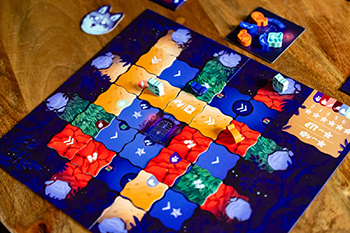
That variability creates a reason to look at more than simply the action printed on a tile. A useful action might come on terrain you need elsewhere, or the space you want to cover might be one you would rather save. Since animals travel across the tiles you’ve placed, building toward the middle and actually getting everyone moving are connected problems. A route doesn’t accomplish much if its intended traveler is still waiting at the entrance.
Games like this can get a little stale if the options are the same every time. But with only three species in a session, sessions vary with each game play because they interact differently depending on the other species in play. The different movement abilities give those changes a practical purpose. A route intended for penguins deserves a different look when sloths are involved.
If Night at the Zoo sounds like something your family would enjoy, ask for it at your favorite local game store. You can also check the Capstone Games website for a copy. And if you have a local zoo, see if they offer event space where you can get a group of people together and play your favorite animal-themed games!
Which animal would you be most worried about getting back to the zoo on time?