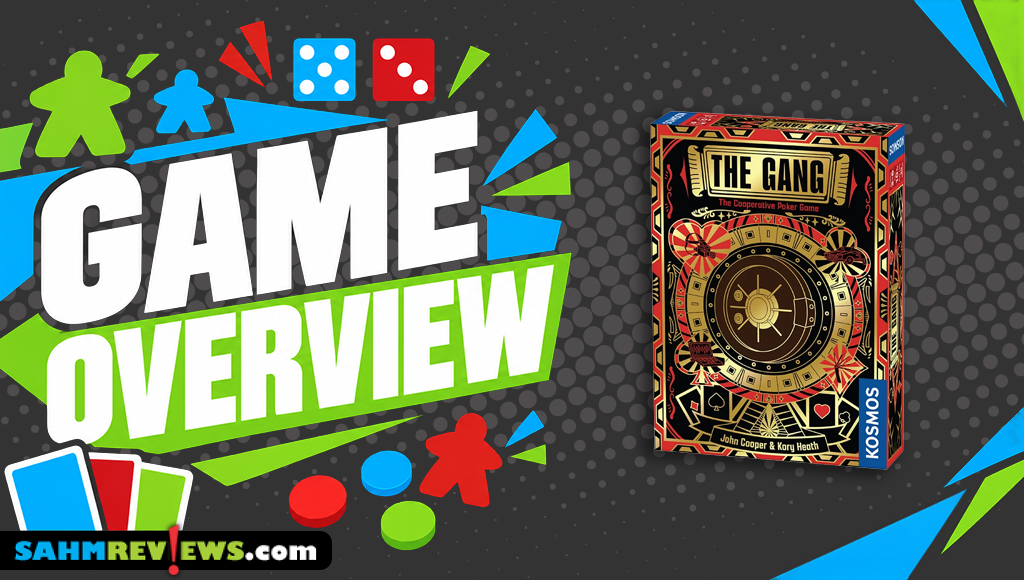
Game Overview – The Gang by Kosmos
Mention poker and people tend to picture a table full of chips, somebody wearing sunglasses indoors and at least one person who insists they can tell when everyone else is bluffing. It isn’t usually the first thing that comes to mind when you’re looking for a cooperative game. After all, helping someone else win rather defeats the purpose. Unless, of course, everyone is on the same team.
That’s the idea behind The Gang from Thames & Kosmos. Designed by John Cooper and Kory Heath, this card game puts three to six players, ages 10 and up, on a crew attempting to crack bank vaults. Traditional poker requires a knack for bluffing, and you never know how long it will last, The Gang, on the other hand, replaces the bluffing with logic, and a full game only takes about twenty minutes.
The cards may look familiar, but the job is different. You’re trying to figure out where your poker hand belongs compared to everyone else’s. Having the weakest cards at the table is perfectly fine as long as you recognize it. There’s something refreshing about a game where admitting you’re probably last can help everybody win.
For the basic game, set out the three vault cards and three alarm cards, then give everyone the gameplay and hand-ranking references. Sort the chips into their four colors: white, yellow, orange and red. Each color represents a stage of the heist. Use only the star values up to your player count, so a four-player game uses the one- through four-star chips.
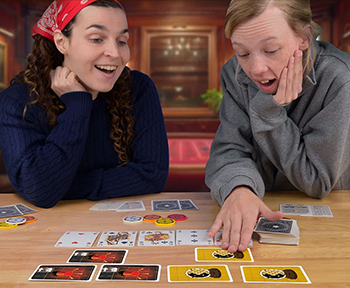
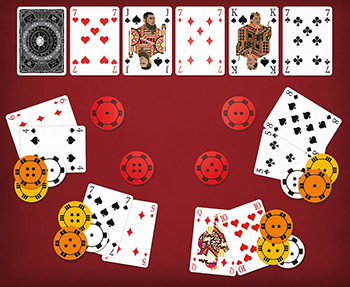
Each heist begins with two private cards dealt to every player. Look at yours, keep them hidden and choose a white chip to indicate where you think your hand currently ranks. These chips aren’t money, and you aren’t placing a bet. They’re your way of telling the table how confident you are without explaining what you’re holding.
In that four-player game, taking the one-star chip means you believe your hand is the weakest. Taking the four-star chip means you think it’s the strongest, while two and three claim the positions in between. A three-star chip doesn’t mean you have three matching cards or earn three points. It simply says, “I think one of you has a better hand than mine.”
There’s no turn order when claiming chips. You can even take one another player has already selected if you believe that position belongs to you. They’ll need to choose another, and adjustments continue until everyone has a chip of the current color. Suddenly, that little piece of plastic has quite a lot to say.
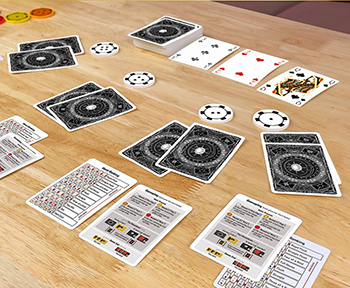
Unfortunately, you can’t explain your choice by announcing your cards or dropping hints about them. The chips do the communicating. Two people can both feel confident, but somebody still has to take the lower position! The puzzle is deciding what everyone’s confidence means when you can see your own cards but theirs remain a mystery.
Next, three shared cards are revealed in the center of the table. Everyone can use these community cards with their private cards to form a poker hand. Now you choose yellow chips to show your updated rankings. Keep your white chips visible in front of you, because seeing how someone’s assessment changes gives the rest of the crew useful information.
For example, someone who claimed the weakest position before those shared cards appeared might now reach for the highest chip. You still don’t know their cards, but that jump is something to consider before making your own choice. Did the new cards help them more than they helped you? Your hand can improve without becoming the strongest one.
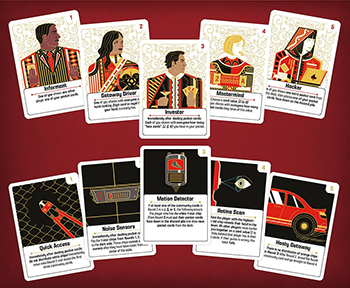
A fourth community card brings out the orange chips, then a fifth brings out the red ones. Each new card gives everyone another opportunity to reconsider. Earlier chips remain visible, creating a little history of each player’s confidence. At the showdown, however, only the red chips determine the order in which hands are revealed.
Starting with the one-star red chip, reveal hands from weakest to strongest. Each player uses their best five-card combination from the seven available cards. Genuinely tied hands can appear in either order. Get the ranking right and you open a vault; a mistake triggers an alarm. Open three vaults before triggering three alarms to win together.
Once everyone understands the basics, Advanced Mode adds challenge and specialist cards. A successful heist makes the next one harder through a challenge, while a failure brings specialist assistance. Even thieves can use a little help.
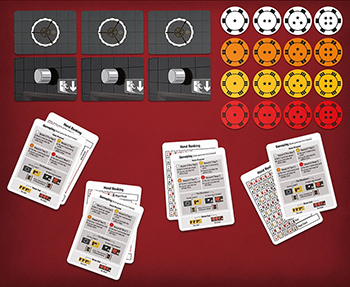
If poker is unfamiliar, spend some time with the ranking references first. Knowing which combination beats which matters, even when everyone shares the same goal. If this cooperative puzzle sounds like your group’s kind of challenge, ask your local game store about The Gang, visit the Thames & Kosmos website or heist it from Amazon!
Would you rather play poker against your friends or work together to pull off a heist?